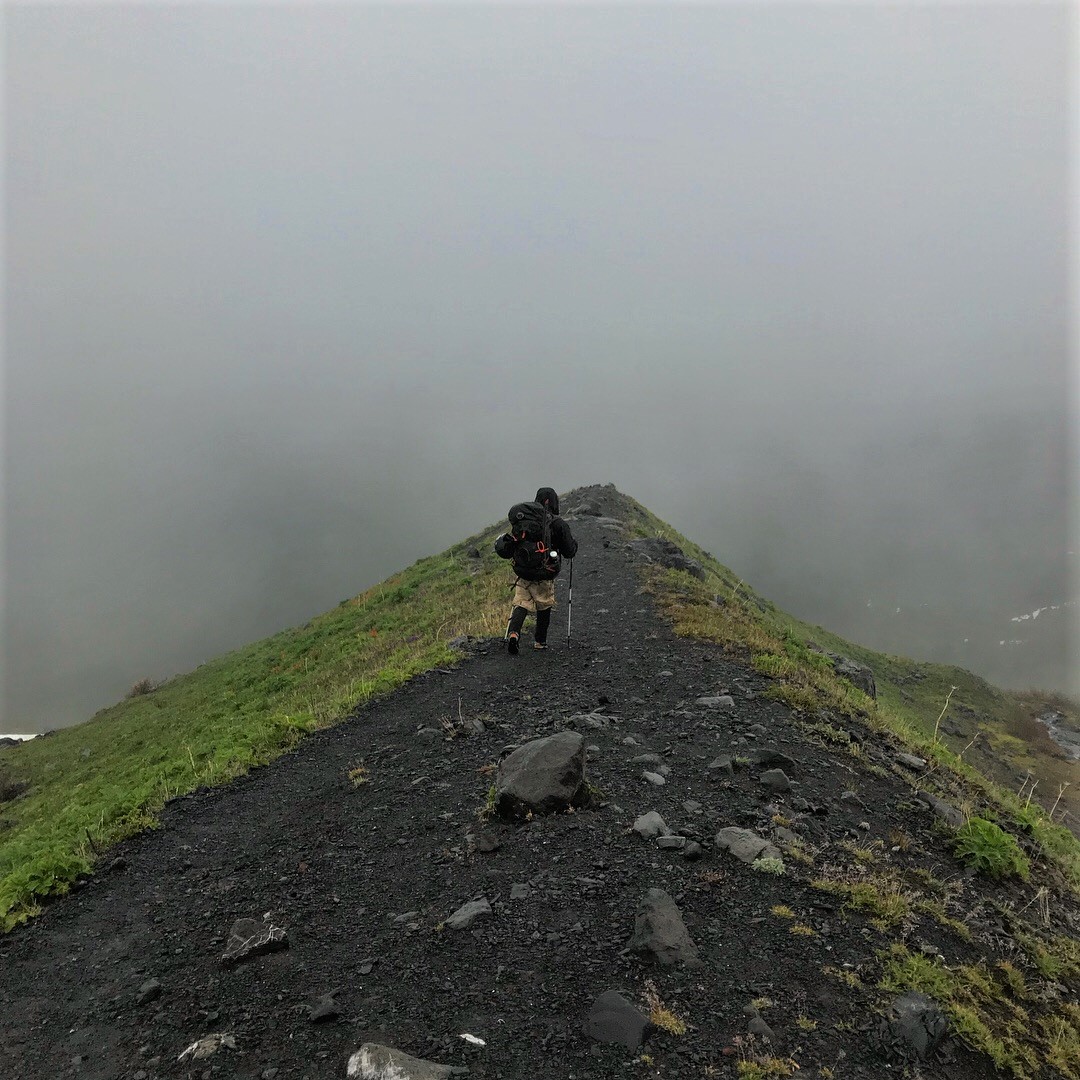
Tough Decisions Mountaineering
Summer in the Pacific Northwest is supposed to be that brief time between spring and fall that the sun shines and the rain stays away. Northwest summers are a special season that make people from out of the area fall in love with the beauty of the area and keep those that are live here from leaving, we have had some amazing summers in the last few years, but the weather does remain capricious, always willing to throw in a surprise here or there or have its own way at will.
I for better or worse have been organizing groups to go mountaineering for the last 4 or 5 years. Typically these have been Boy Scout groups for young men 16 and up. We usually try to have the activity, especially if it is mountaineering selected by January so that we can start our training in the winter and be prepared by early summer for the activity, because another activity was selected I figured climbing wasn’t going to happen. However in early April I felt impressed to put together a Mt. Baker climb. I talked with some of the boys that had done previous climbs with me and they were good to go, then I spoke with some of the other adults that I had climbed with in the past and most of them were in and wanted to bring family members.
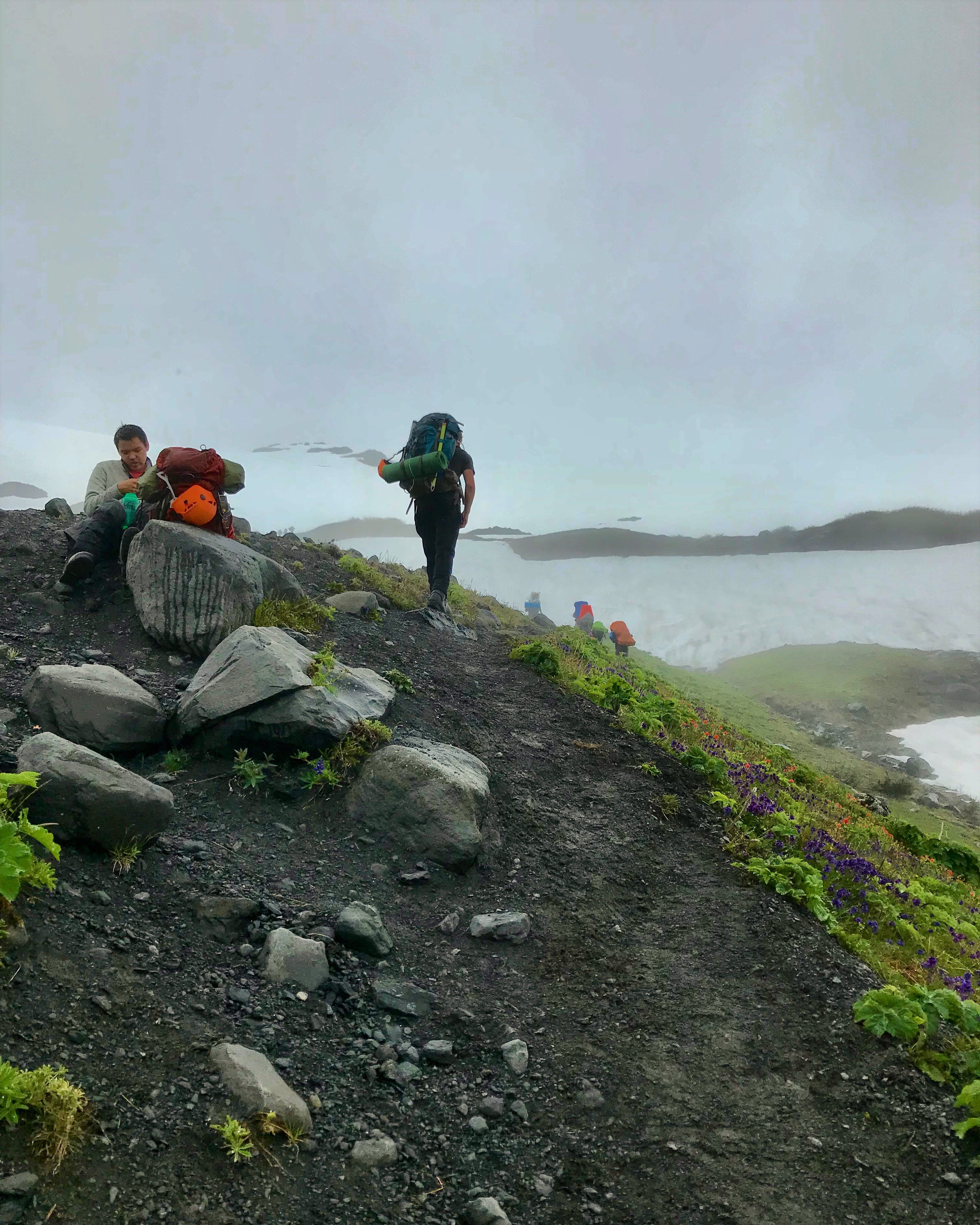
Most people do Mt. Baker as a 2 day climb, which was our plan, we would head up to base camp at the hogsback at Heliotrope Ridge then do an alpine start for a summit attempt early Saturday morning, after reaching the summit we would return to camp, take a nap, and then head home. The dates we selected were for June 29th and 30th, generally a good bet that the weather will be fair.
Well it wasn’t. I don’t really know much about weather in other parts of the country but here sometimes when we have an event coming up on a certain date we’ll start printing out weather forecasts 2 weeks in advance so we can see how the forecast changes from day to day. Quite often the forecast for 2 days out even isn’t accurate. The weather forecast had been shifting around for our climb and in the end unfortunately the forecast was accurate, it just wasn’t in our favor.
Meeting that morning under a deck of grey clouds we decided to head up and take a look anyway. For some it was the only weekend they had available to climb and since they had already taken the time off work wanted to go anyway. I had been up a month earlier to the hogsback and while the weather wasn’t great down at sea level on that day, it was OK up on the mountain.
When we arrived at the Heliotrope Ridge trailhead it had not yet began to rain but the skies were solid cloud. While we finished packing up and getting on the trail a few sprinkles began to fall.
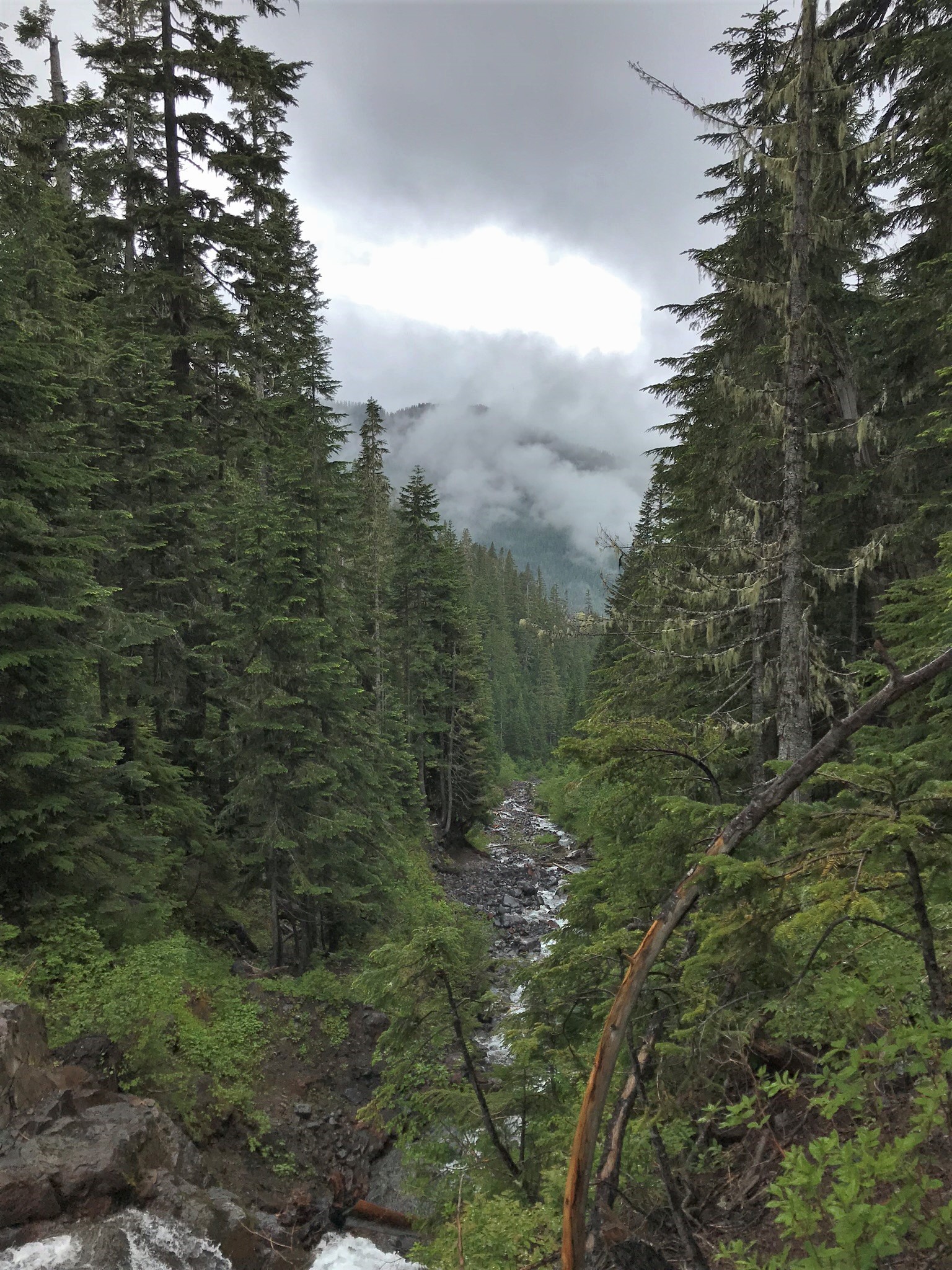
The hike through the woods was great, despite the weather spirits were high and the conversation was enjoyable.
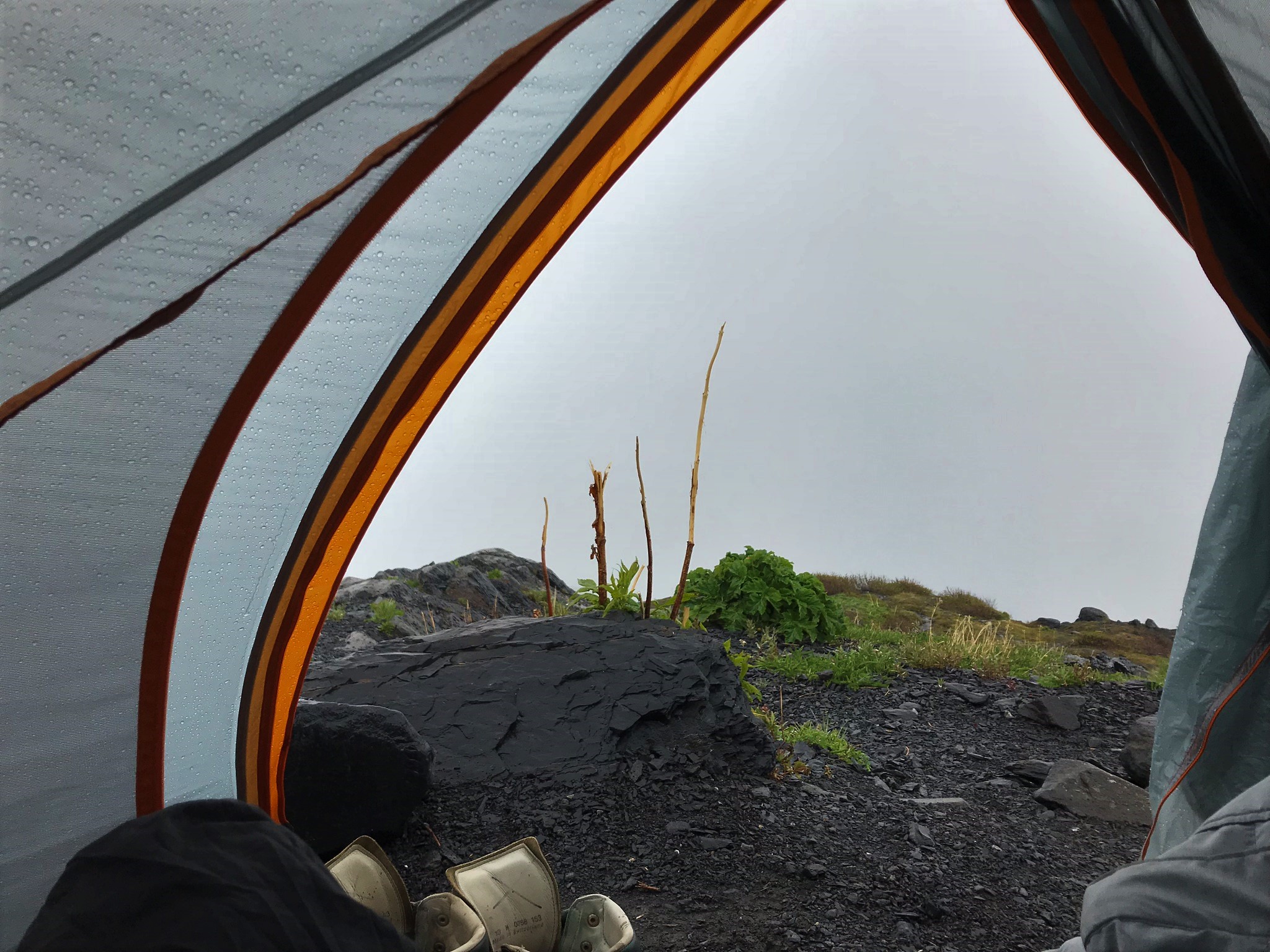
When we arrived at the Hogsback we quickly set up camp and no sooner than we had our tents up it began to rain quite hard. As seems to be typical for me, I had been busy coming up to this activity and was kind of tuckered out to begin with so on one hand have the respite of the rain to trap us in the tent for a little bit and get a nap was nice, on the other hand we needed to be up doing some training with the new guys and preparing our gear for the climb.
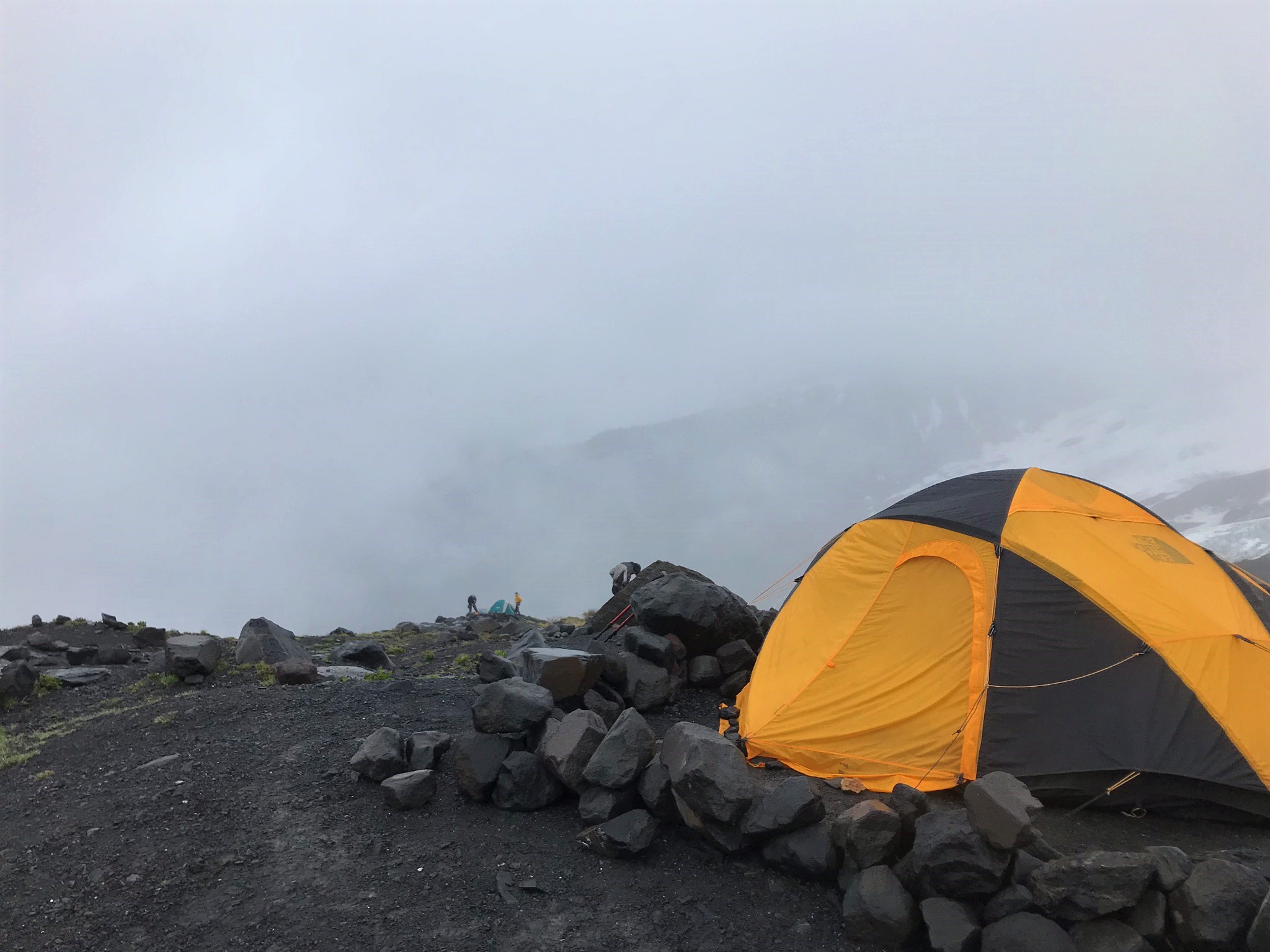
So while we ducked into our tents to get out of the pouring rain, my hope at this point was that the rain would back off in an hour or so and that we could continue making our preparations. It soon became apparent however that the weather was not going to improve significantly. So after a couple of hours of hiding out in the tent I got up. The rain had backed off to the point of not being a torrential downpour, but the clouds kept rolling in and out, sometimes we were in the clouds and sometimes we were just below the cloud deck, but never could we see the top of the mountain and usually we could not see the top of the glacial headwall in front of us.
When I got up I found that everybody was happily tucked away in their tents, unfortunately they were all spread out. We began to discuss our options and whether or not we should press on. Some were keen to keep going for the summit but the conversation always turned to putting the final decision on me. Knowing from experience that the chances of us being able to return and try again were slim due to the busy nature of summer schedules I felt quite a bit of pressure to not call off the climb if at all possible.
For quite a while I contemplated the current weather, looked at the hourly forecasts, considered the hazards we might face on the mountain, and took into account the responsibility I had to bring at least the youth involved in the trip home in more or less one piece.
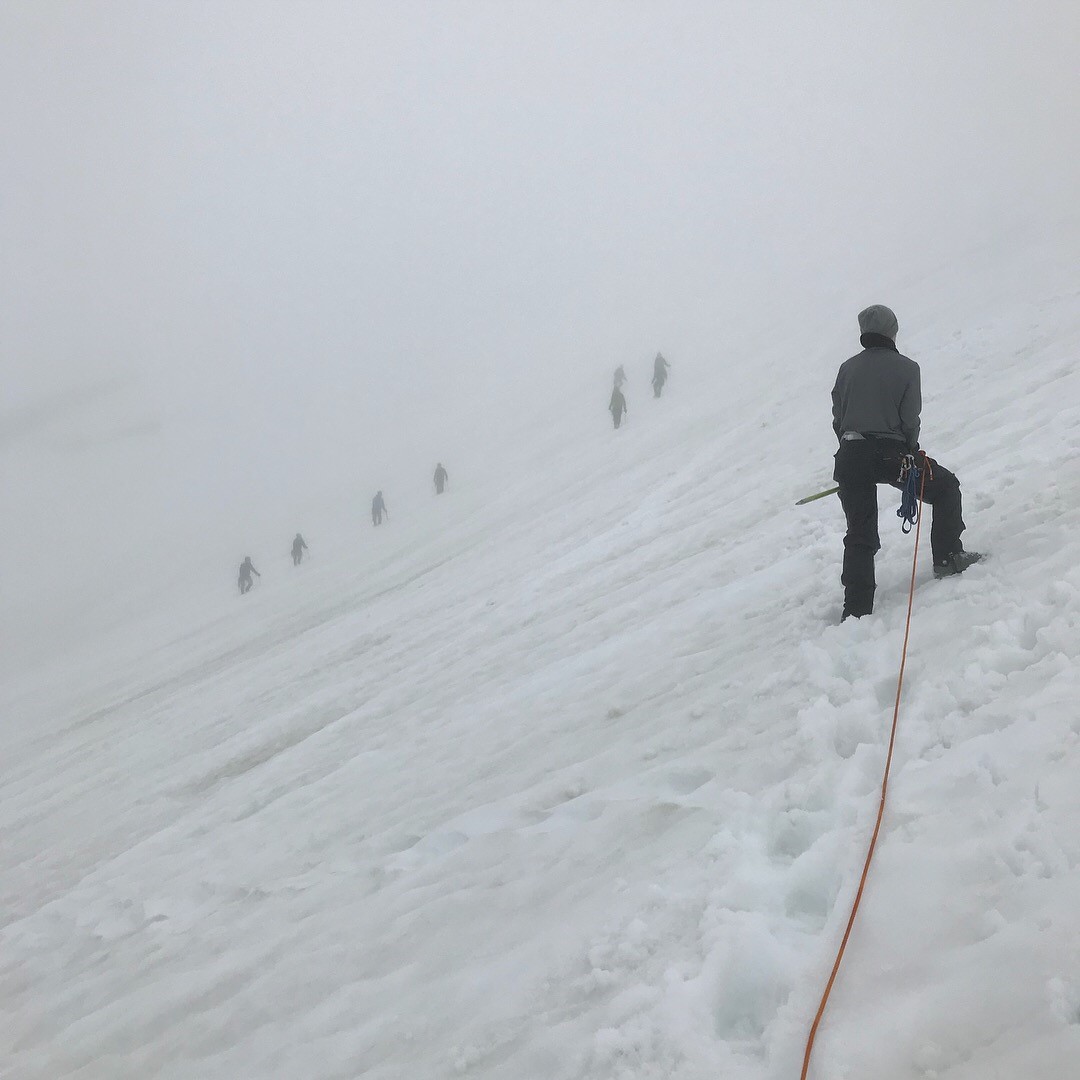
After really sitting down and looking through the weather forecast which showed periods of heavy rain below 8,000 ft and snow above 8,000 ft, polling the group to find out who was proficient with compass/gps navigation in a white out, and considering that we would most likely at a minimum be wet and miserable as well as suffering through minimal visibility, while traveling on a glacier full of crevasses, it was decided that the prudent thing to do was to call off the summit attempt.
This was a difficult decision to make, as I mentioned historically getting a second shot at it has proven to be almost impossible as people’s summer schedules are usually booked full. Northwest weather tends to be unpredictable, which also means that we could have left in a rainstorm just to see sunny weather the next day, but sometimes, and especially in mountaineering you have to make a hard decision and live by it. In this case with all of the factors weighed, level of preparedness, level of experience, current weather, weather forecast, known route conditions, and even the pleasure factor, not going was the right decision even though it was the tough one to make.
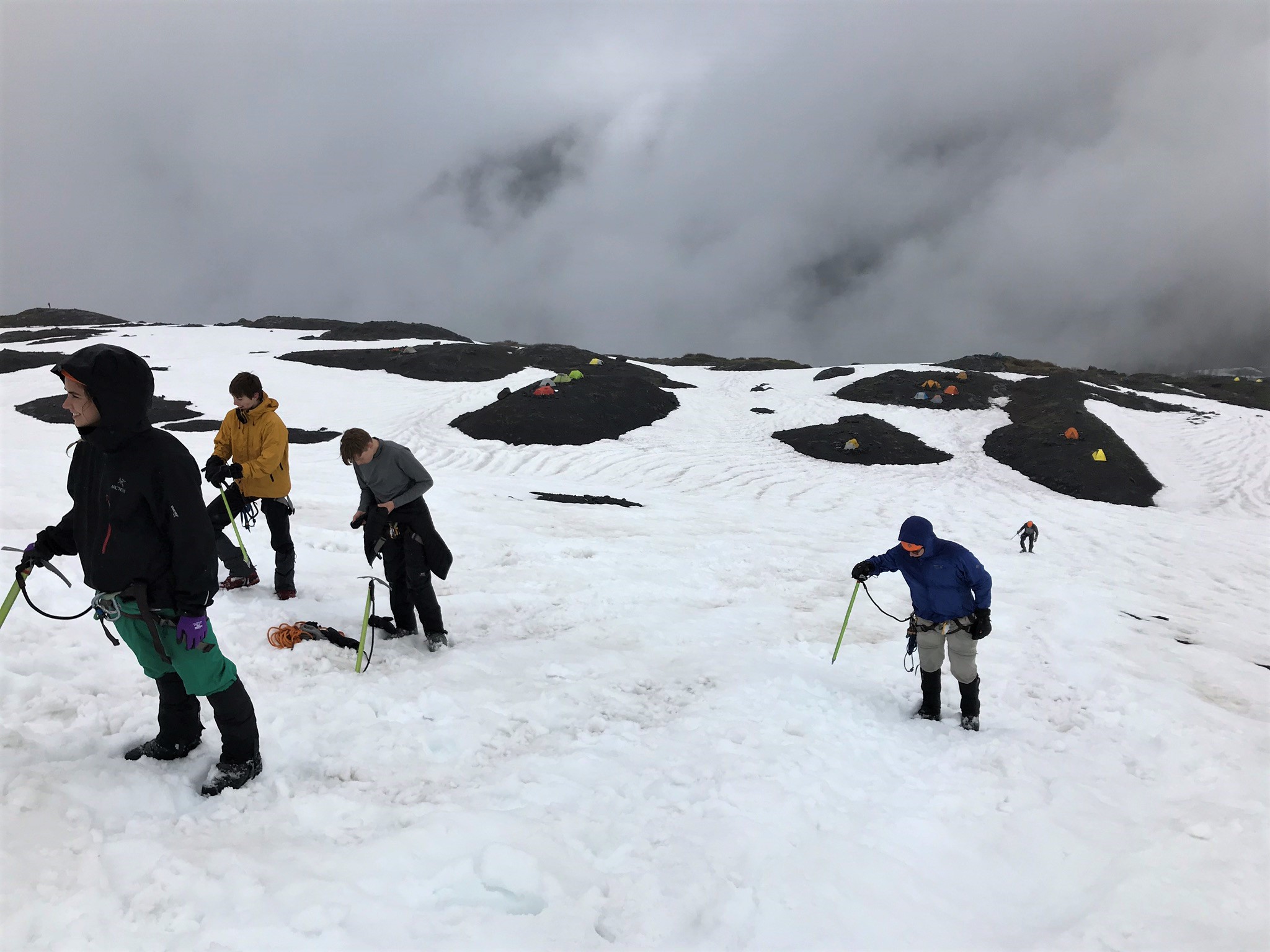
We had planned on doing some on snow training earlier that afternoon that had been put off due to the rain. As the rain had lifted to just a few sprinkles by the time the decision to call off the summit attempt was made we decided to go ahead and do that so that we would be more prepared should we be able to put together a second attempt. We got everybody roused out of their comfortable sleeping bags and up on the foot of the glacier and spent an hour or so practicing being roped in, self arrests, and crevasse rescue techniques. During this time the clouds continued to move in and out at times we couldn’t even see camp just a few hundred feet below us. This really helped some of the people that maybe weren’t so sure about calling it off realize that it was a good call.